Planning Your Visit
Korea in Every Season: Plan Your Visit with WEmedical
Find your season in Korea, with practical weather advice, thoughtful travel arrangements and clinic visits planned around you.
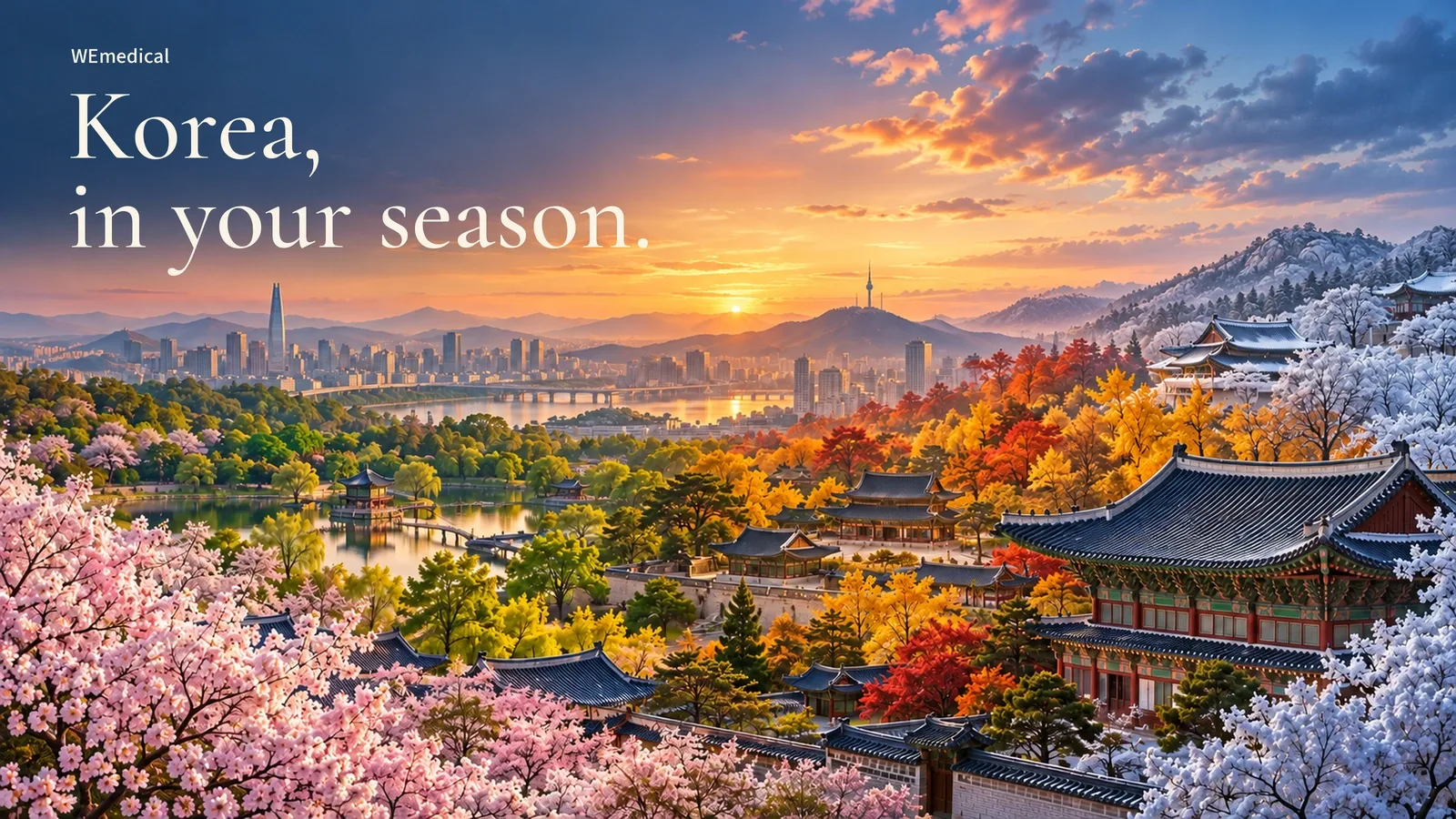
A spring escape with your partner. An autumn trip with family. A winter week you’ve finally kept free. Korea can feel like a different destination each time you visit.
When care is part of the trip, WEmedical helps you bring the plans together: the clinic, your appointments and the practical details of being here. Start with the season you love, then leave room for the care you’re coming for.
Spring and autumn: dress for changing days
Spring · March–May. Days gradually warm up, while mornings and evenings can still feel cool. Bring layers you can take off easily and leave room for relaxed stops between plans. Blossom-lined streets are an inviting part of the season, with the exact timing depending on where and when you visit.
Autumn · September–November. September can still bring warm weather before the cooler days of October and November. A light jacket is useful as the season changes. If you’re planning a procedure, let your clinic’s activity advice set the pace for any walks or sightseeing.

Summer and winter: make the journey comfortable
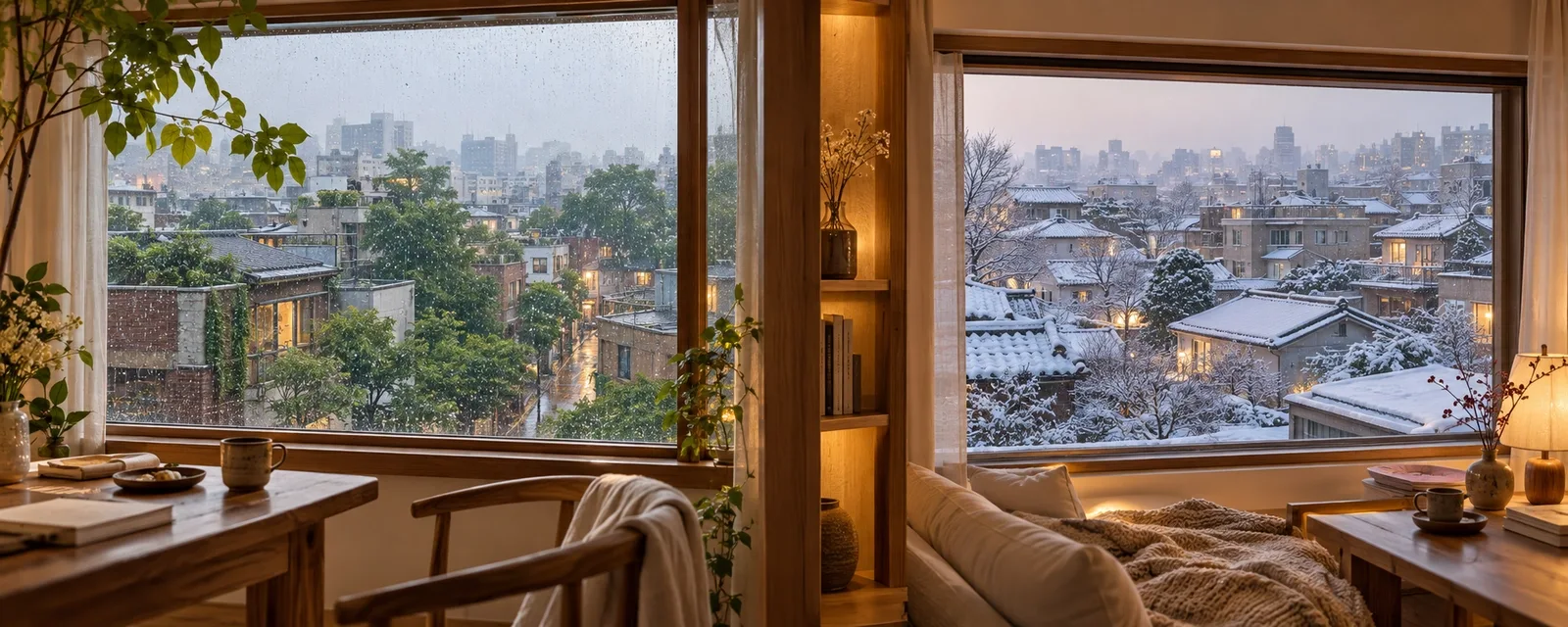
Summer · June–August. Expect heat and humidity, with a rainy period commonly overlapping late June and July. Keep the day flexible, with indoor breaks rather than a long outdoor itinerary. Our hotel-to-clinic vehicle support can be particularly welcome when you’d rather avoid walking in the heat or rain.
Winter · December–February. Korea’s winter is cold and dry, with freezing conditions possible. Pack a warm coat and comfortable layers. Plan easy journeys between your hotel and appointments, and save time for warm indoor stops.
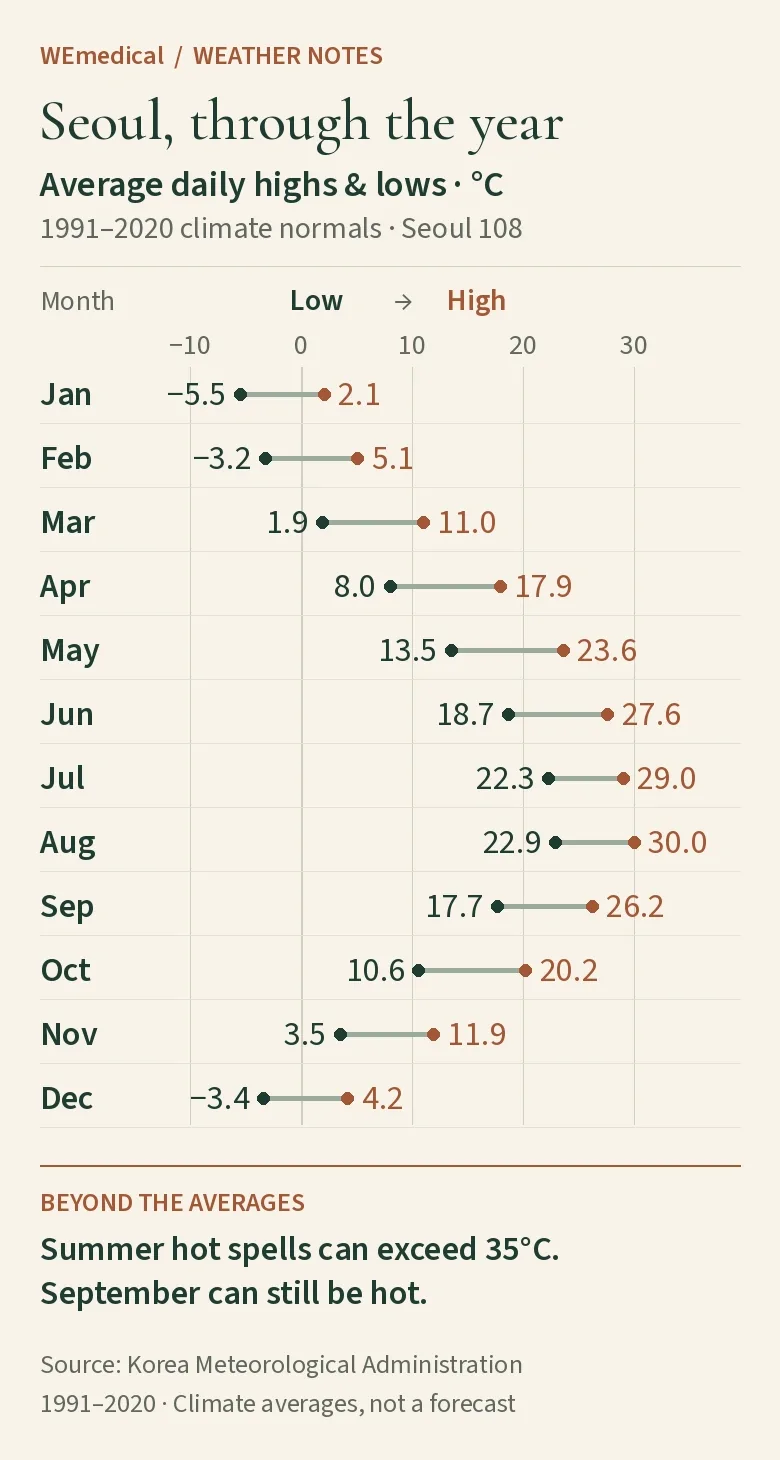
A more useful view of Seoul’s weather
The chart below pairs average daily highs with average daily lows, so you can picture the difference between warmer daytime conditions and cooler nights. Summer hot spells can bring afternoons above 35°C. September can also stay hot: Seoul recorded heatwave days with highs of at least 33°C in September 2024. Climate averages are a starting point for packing, not the limits of possible temperatures. Check the forecast and heat alerts for your destination before departure.
Build your itinerary around your care
For skin procedures, ask about sun protection and the skincare routine for your treatment. Laser scar treatment, for example, calls for protecting the skin from the sun while it heals. Shorter outings or an indoor afternoon can fit naturally into your plans.
For surgery, allow time for rest and follow-up appointments. Agree your return-flight plan with the surgical team, and ask when active outings or sauna visits fit your recovery.
For health screening, get your centre’s exact food, water and test-preparation instructions in advance. Plan meals and travel around the appointment rather than applying a general fasting rule.
For dental care, think about meals as well as appointments. If you’re having an extraction, ask about soft foods and hot drinks after your visit, so you can plan comfortable meal options.
Your season, with WEmedical by your side
Begin with a one-to-one video conversation or our consultation form. Tell us your preferred dates, the care you’re interested in and who is travelling with you. We can explore treatment and clinic options around your needs, with personally arranged transfers and in-person clinic accompaniment.
Working closely with the clinic, we help the practical parts of your visit fit together. Whether you’re travelling alone, as a couple or with family, our transport support can be planned around your trip.
This guide provides general information. A consultation with a qualified medical professional is needed to discuss your individual care.